OrDie Beauty
Hyaluronic acid and peptides are now central to many hydration and firming routines. Grand View Research reported that the global skincare products market reached approximately US$155.7 billion in 2022. It also projects continued growth through 2030. That expansion reflects consumer interest, not automatic proof that every layered routine works. Formulation quality still matters.
The practical question is simple: how to layer hyaluronic acid and peptides together without creating unnecessary irritation or product pilling. Hyaluronic acid attracts water and can leave skin feeling plumper. Peptides are short amino-acid chains used in formulas designed to support visible skin firmness. Their results depend on concentration, stability, delivery systems, and consistent use. The International Dermal Institute emphasizes that ingredient performance depends heavily on the finished formulation, not only the ingredient label.
A sensible routine usually begins with gentle cleansing. Apply a lightweight hyaluronic acid serum to slightly damp skin. Follow with a peptide product, then seal everything with moisturizer. Finish with sunscreen during daylight. Keep it simple. Yet this order is not a universal law. Some peptide formulas contain oils, silicones, or exfoliating acids, which can change the best placement. Mintel’s beauty research repeatedly identifies personalization and ingredient transparency as major consumer priorities, but marketing language can still oversimplify evidence. Patch testing remains sensible, especially for reactive skin. If tightness, stinging, or persistent redness appears, reduce frequency and seek professional advice. The best routine is not the most complicated one. It is the one your skin tolerates consistently.
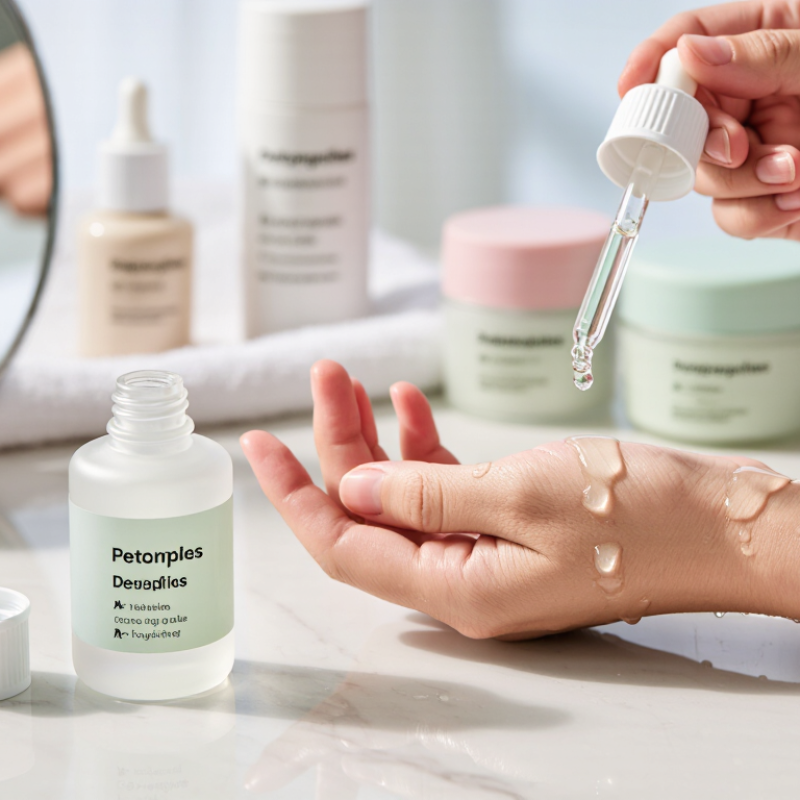
Understanding Hyaluronic Acid and Peptides in Skincare
Hyaluronic acid is a humectant that attracts water to the skin’s surface. It can make dry, tight skin feel softer and more comfortable. Peptides are short chains of amino acids. Different peptides may support the skin’s appearance, firmness, or barrier function. Their effects usually develop gradually, not overnight. For layering, cleanse gently and apply hyaluronic acid to slightly damp skin. Follow with a peptide serum, moisturizer, and sunscreen in the morning. Thin textures usually work best before thicker ones.
Tips: Use only a few drops of each product. Press them in gently instead of rubbing hard. Seal hyaluronic acid with moisturizer, especially in dry weather. Test new products on a small area first. If your skin feels sticky or pills appear, use less product or wait longer between layers.
Formulas differ, so the ingredient list and product directions still matter. Some peptide products already contain hydrating ingredients. In that case, adding another serum may be unnecessary. A practical observation is that damp skin helps hydration, but overly wet skin can dilute products. Results also depend on concentration, stability, and regular use. Evidence for peptides is promising, yet not every formula performs equally. Sensitive skin may react to preservatives or added acids rather than the main ingredients. Stop if burning or persistent redness develops, and seek professional advice when irritation does not settle.
Hyaluronic acid and peptides support skin differently. Hyaluronic acid is a humectant, attracting water near the skin surface. A 2021 review in the Journal of Clinical and Aesthetic Dermatology notes that hyaluronic acid can hold up to 1,000 times its weight in water. However, this depends on its molecular size and formula. It does not permanently “fill” wrinkles.
Peptides are short chains of amino acids. Some support visible firmness by signaling skin cells, while others help condition the skin barrier. A 2022 review in the International Journal of Molecular Sciences found promising peptide evidence, but many trials lasted only 4–12 weeks. Sample sizes were often small. That matters. A convincing ingredient still needs better long-term data.
Apply a gentle cleanser first. Leave the skin slightly damp. Press in a thin layer of hyaluronic acid, then use the peptide serum. Follow with a moisturizer to reduce water loss. This order is practical, not absolute. Formulas vary, and thicker products may work better first. Avoid rubbing aggressively around the eyes. If the skin feels tight after application, the routine may need more moisturizer or less product. Market reports show strong growth in hyaluronic acid demand, but popularity is not proof of performance. Patch testing remains sensible, especially when the formula contains acids, fragrance, or several active ingredients.
When layering hyaluronic acid and peptides, apply the thinner product first. In many routines, that means hyaluronic acid before a peptide serum. Hyaluronic acid attracts water and spreads easily over slightly damp skin. Peptides can then sit closer to the surface and support the skin’s conditioning routine.
I use two or three drops of hyaluronic acid after cleansing. I press it onto damp cheeks, the forehead, and around the mouth. I wait about thirty seconds, then apply the peptide product. This short pause prevents excessive rubbing and pilling. A moisturizer follows while the skin still feels comfortable, not sticky.
Texture matters more than ingredient names. If the peptide formula feels watery and the hyaluronic acid feels creamy, reverse the order. Skincare rules are not flawless. I once layered two thick serums and created small rolls along my jawline. The ingredients were compatible, but the formulas were not. Some skin disagrees. Patch test matters. Use less product when combining active formulas, especially if your skin feels warm, tight, or unusually dry. Avoid applying either serum to completely dry skin if hydration is your goal, because a light layer of water can improve the feel and reduce dragging.
After cleansing, leave your skin slightly damp, not dripping. Apply two or three drops of hyaluronic acid serum, then press it gently across your face. Damp skin helps reduce tightness, although it does not guarantee deeper delivery. Wait about 30 seconds. Apply a peptide serum next, using light strokes around the cheeks, forehead, and neck. Peptides are generally compatible with hyaluronic acid, and this order follows the practical thin-to-thick rule. A 2023 review in Dermatology and Therapy linked topical hyaluronic acid with improved skin hydration, but results differed by molecular size and formula.
Seal the layers with a fragrance-free moisturizer. In the morning, finish with broad-spectrum SPF 30 or higher. The American Academy of Dermatology recommends this protection daily, even on cloudy days. At night, repeat the routine without sunscreen. Keep it simple. Use less product. Excess serum can pill under makeup, especially when rubbed quickly. Grand View Research reported that the global hyaluronic acid market reached approximately USD 11.6 billion in 2022, reflecting strong demand, not proof that every serum performs equally. Read the ingredient list and follow the product’s directions. If your peptide formula also contains exfoliating acids or retinoids, alternate nights at first. Patch-test near the jawline for several days. My practical caution is easy to overlook: applying HA to very dry skin without moisturizer may feel tighter later. Skin behavior varies. A routine can look correct on paper and still need adjustment.
Apply products from the lightest texture to the richest: cleanse first, use hyaluronic acid on slightly damp skin, follow with peptides, then seal with moisturizer. Finish with broad-spectrum sunscreen in the morning.
Hyaluronic acid and peptides can usually share the same routine. The order is simple, but application mistakes often cause dryness, pilling, or irritation. Start with a gentle cleanser, then pat your skin until it feels slightly damp. Apply a lightweight hyaluronic acid product first. Follow with a peptide serum, moisturizer, and sunscreen in the morning. The damp-skin step matters. Hyaluronic acid attracts water, but it does not create water.
Do not apply hyaluronic acid to completely dry skin in a dry room. It may leave the surface feeling tight, especially without moisturizer. Using too much product is another common error. Two or three drops can cover the face. More is not always better.
Wait briefly between layers, but avoid letting each product fully dry and become sticky. Pilling may result from heavy textures, rubbing, or excessive layering. Press products into the skin instead.
Peptides are generally gentle, yet the full routine may still irritate sensitive skin. Fragrance, exfoliating acids, or retinoids could be the real problem. Introduce one new product at a time, and patch test near the jawline first. Some peptide formulas may have specific storage or usage instructions, so read the label carefully. The routine can be adjusted. If redness, burning, or persistent itching develops, stop using the products and seek advice from a qualified dermatologist.
Usually, yes. Apply hyaluronic acid to slightly damp skin, then use the peptide serum.
Cleanse gently, apply hyaluronic acid, use peptides, add moisturizer, and finish with sunscreen in the morning.
Hyaluronic acid attracts water. Slightly damp skin can feel more comfortable and hydrated.
Not ideal. Excess water may dilute the products.
Two or three drops may cover the face. Extra product can cause stickiness or pilling.
Heavy layers, rubbing, or short waiting times can create small flakes. Press products gently instead.
Usually not. Their effects may develop gradually with regular use, and results can vary.
It is better to moisturize, especially in dry weather. Hyaluronic acid attracts water but does not create it.
Fragrance, preservatives, acids, or retinoids may cause irritation. Patch test near the jawline first.
Stop using the products if irritation persists. Seek advice from a qualified dermatologist. The routine may need changes.
Hyaluronic acid and peptides are complementary skincare ingredients that support hydrated, smoother-looking skin in different ways. Hyaluronic acid attracts and helps retain moisture, while peptides are short chains of amino acids that help support the skin’s appearance and resilience. Understanding how each ingredient works makes it easier to build an effective routine without unnecessary complexity.
To learn how to layer hyaluronic acid and peptides together, start with freshly cleansed, slightly damp skin. Apply the product with the lighter, more water-based texture first, which is often hyaluronic acid, then follow with a peptide serum or treatment. Gently press each layer into the skin and allow a short moment for it to settle before applying moisturizer. Finish with sunscreen during the daytime. Avoid applying too many products at once, using excessive amounts, or layering formulas that cause pilling. If irritation occurs, simplify the routine and introduce products gradually.