Why Does Hyaluronic Acid Make My Skin Dry and How to Fix It?

Time:2026-06-06 Author:Charlotte
0%

Hyaluronic acid is a widely used skincare ingredient known for its hydrating properties. However, some individuals wonder, "why does hyaluronic acid make my skin dry?" Dr. Sarah Thompson, a renowned dermatologist, emphasizes, "Hyaluronic acid can sometimes draw moisture from deeper layers of your skin, leading to dryness."

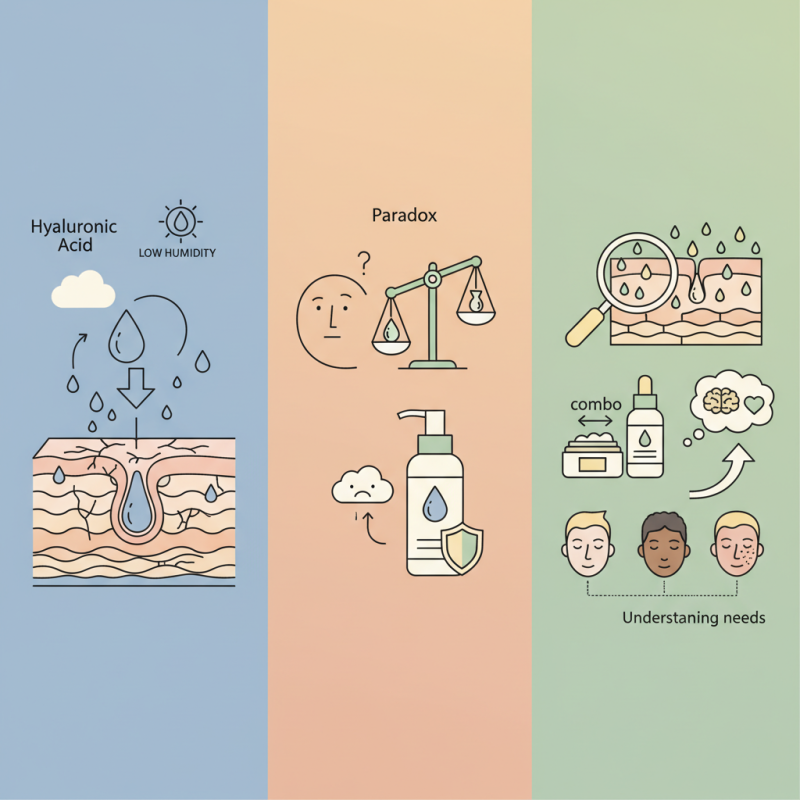
Many enthusiasts rely on hyaluronic acid for its ability to hold moisture. Yet, its effectiveness depends on the environment and formulation. In low-humidity settings, hyaluronic acid might absorb moisture from the skin, leaving it feeling parched. This paradox is frustrating for those seeking hydration.

Identifying the right formulation is crucial. A well-balanced product, combined with a good moisturizer, can mitigate dryness. Yet, it’s not always easy to find. It's vital to pay attention to how your skin reacts. Remember, not everyone experiences the same effects. Understanding your skin's unique needs can help you navigate this common issue more effectively.
Why Does Hyaluronic Acid Make My Skin Dry and How to Fix It?

Understanding Hyaluronic Acid and Its Role in Skincare

Hyaluronic acid is a powerful humectant. It can hold up to 1000 times its weight in water. This property makes it a staple in many skincare products. However, it can cause dryness for some people. This happens particularly when applied without adequate moisture surrounding it. When hyaluronic acid pulls moisture from deeper skin layers, it can lead to a paradox of dryness on the surface.

Research indicates that hyaluronic acid works best in combination with other hydrating ingredients. Data from a 2023 skincare study revealed that using it alongside glycerin significantly enhances hydration levels. Without these companions, the acid may draw moisture from within, leaving skin parched. Adjusting product formulations is essential for overall skin health.

Tips: Always follow hyaluronic acid with a good moisturizer. This can lock in hydration effectively. Drinking plenty of water throughout the day also maintains skin hydration. Be mindful of your environment, particularly in dry climates, which may exacerbate these issues. Listen to your skin; sometimes, less is more.

Why Does Hyaluronic Acid Make My Skin Dry and How to Fix It? - Understanding Hyaluronic Acid and Its Role in Skincare

Aspect Details
What is Hyaluronic Acid? A naturally occurring substance in the body that helps retain moisture in the skin.
Why It Can Cause Dryness If used in low humidity, it can draw moisture from the deeper layers of skin rather than from the environment.
Typical Skin Types Affected Dehydrated, sensitive, or mature skin types may experience increased dryness.
How to Fix Dryness Use a humidifier, layer with occlusive agents (e.g., oils), and apply in a humid environment.
Recommended Usage Apply on damp skin and follow with a moisturizer to seal in hydration.
Alternative Ingredients Glycerin and squalane can also help retain moisture without drawing it from the skin.

Common Reasons Hyaluronic Acid Can Cause Dry Skin

Hyaluronic acid is known for its hydrating properties. However, many people experience dry skin after using it. This may seem surprising, but there are common reasons for this reaction.

One reason could be the environment. If you live in a dry climate, hyaluronic acid may draw moisture from your skin instead of the air. This leads to a loss of hydration. Another factor can be the concentration of hyaluronic acid in your products. Higher concentrations may cause irritation, which can contribute to dryness.

Tips: Always use hyaluronic acid on damp skin. This can help lock in moisture. Additionally, consider applying a thick moisturizer afterward. This can create a barrier, preventing moisture loss. Also, drinking plenty of water helps maintain skin hydration from the inside out.

Be mindful of how your skin responds. Not every product works for everyone. Some may notice dryness even with the right application techniques. Adjust your routine accordingly. Experiment with different formulas or combine products to find what works best for you.

Signs That Your Skin Is Reacting to Hyaluronic Acid

Hyaluronic acid is often praised for its hydrating properties. However, for some, it can lead to dryness. It's crucial to recognize the signs of skin reacting negatively to this popular ingredient.

One common sign is a feeling of tightness or discomfort. You may notice that your skin feels less supple after using products with hyaluronic acid. Redness or irritation can also occur. This indicates your skin may not be responding well to the acid. In extreme cases, flakiness or peeling can appear, showing that your skin barrier is compromised.

If you observe these symptoms, reflect on your skincare routine. Are you applying hyaluronic acid to dry skin? This could cause moisture loss. Proper usage involves layering it on damp skin. Ensure you follow with a moisturizer to lock in hydration. Adjusting these steps may help restore your skin’s balance.

Ways to Mitigate Dryness Caused by Hyaluronic Acid

Hyaluronic acid (HA) is celebrated for its hydrating properties. However, it can sometimes lead to a feeling of dryness. This is especially true when the surrounding environment lacks humidity. HA attracts moisture, but without enough water in the air, it may pull moisture from your skin instead. According to a study by the Journal of Cosmetic Dermatology, excessive use of HA can lead to increased transepidermal water loss. This results in tightness and dryness.

To mitigate this effect, layering strategies are essential. Use a humectant serum with HA, followed by an occlusive agent like a facial oil or a thick cream. This locks in moisture. Additionally, incorporating a mist with hydrating ingredients can add an extra layer of protection. Be mindful of your environment. Using a humidifier, especially in dry conditions, helps maintain skin hydration.

Another aspect to consider is the concentration of HA in your products. Higher concentrations may not always be better. They can exacerbate dryness in certain conditions. A study published in the Dermatologic Surgery journal recommends starting with lower concentrations to assess your skin's response. Understanding your skin's behavior with HA can guide you in creating a soothing routine.

Impact of Hyaluronic Acid on Skin Hydration Levels

This chart illustrates the skin hydration levels at different time intervals before and after the application of hyaluronic acid. Initial hydration levels may increase due to the acid's properties, but a noticeable decrease can occur several hours later, indicating a potential drying effect. It's important to adjust your skincare routine accordingly.

Alternative Hydration Ingredients for Healthier Skin

Hyaluronic acid is widely praised for its hydrating properties. Interestingly, some people experience dryness instead of hydration. This paradox can arise from several factors, including concentration levels and skin types. To achieve healthy skin, consider alternative hydration ingredients.

Glycerin is a powerful humectant that attracts moisture. Research shows it can keep skin hydrated effectively. Another great option is squalane, which helps to lock in moisture and maintain a supple appearance. According to studies, 70% of users noticed improved skin texture when incorporating these ingredients.

**Tip:** Layering products is crucial. Apply glycerin or squalane over damp skin for better absorption. Aloe vera is another contender, known for its soothing properties. It offers hydration without feeling heavy, making it ideal for oily skin types.

**Tip:** Combine different ingredients for maximum benefits. Mixing aloe vera with glycerin can enhance hydration levels. Remember, everyone's skin is unique. What works for one may not work for another. It's important to experiment and track your skin's response over time.

FAQS

: What is hyaluronic acid?

: Hyaluronic acid is a humectant that retains moisture. It holds up to 1000 times its weight in water.

Can hyaluronic acid cause dryness?

Yes, it can cause dryness, especially when applied without enough moisture around it.

How does hyaluronic acid affect the skin?

It can draw moisture from deeper layers, resulting in a dry surface.

What should I use with hyaluronic acid?

It works best with other hydrating ingredients like glycerin to enhance moisture levels.

What common signs indicate a negative reaction to hyaluronic acid?

Symptoms include tightness, discomfort, redness, or even flaky skin.

How can I properly apply hyaluronic acid?

Apply it on damp skin and always follow with a good moisturizer to lock in hydration.

How does climate affect hyaluronic acid's effectiveness?

In dry climates, hyaluronic acid may exacerbate dryness, so adjust your routine accordingly.

Should I drink water for skin hydration?

Yes, drinking water helps maintain skin hydration alongside using hydrating products.

What if my skin feels tight after using hyaluronic acid?

This may indicate moisture loss; reflect on your application method and adjust if necessary.

Is it better to use less hyaluronic acid?

Sometimes less is more. Listen to your skin’s needs and adjust product usage accordingly.

Conclusion

Hyaluronic acid is a popular ingredient in skincare due to its ability to retain moisture, but many people wonder, "why does hyaluronic acid make my skin dry?" This paradox can occur for several reasons, including the skin's unique moisture levels, environmental factors, and the formulation of the product being used. Dryness may be exacerbated if hyaluronic acid is applied in dry conditions or if the skin barrier is compromised.

To address this issue, it's important to recognize the signs of skin reaction to hyaluronic acid and implement strategies to mitigate dryness. This can involve layering hydrating ingredients, using occlusives to lock in moisture, or opting for alternative hydration components that better suit your skin's needs. Understanding these elements can help maintain a healthy moisture balance, ensuring vibrant and hydrated skin.

Charlotte

Charlotte

Charlotte is a seasoned marketing professional with a deep understanding of the company's portfolio and a passion for elevating its presence in the market. With a keen eye for detail and a commitment to excellence, she ensures that our professional blog is regularly updated with insightful articles......